
A blog by Elena Overfield | Formerly Pepetoe
Her Body, Her Choice… But At What Cost?
Sydney Sweeney, SkinnyTok, women in sport and why we’ve forgotten what women’s bodies can actually do.
TW: This article discusses body image, eating disorders, weight loss culture, gambling and the sexualisation of women.
I hate the Sydney Sweeney Novig advert. There. I’ve said it. I think it’s degrading. I think it’s dated. I think it’s incredibly uncomfortable to watch. And, as a woman who desperately wants to encourage more girls to find sport and discover everything their bodies are capable of, I find the whole thing quite painful.
The more I’ve thought about why it makes me so angry, the more I’ve realised that my anger isn’t actually about Sydney Sweeney being naked, because I also believe wholeheartedly in bodily autonomy. I believe women should wear whatever the fuck they want. I believe women should be allowed to feel sexy, show their bodies, enjoy attention and profit from their sexuality if they choose to. Nudity isn’t inherently degrading. A woman shouldn’t have to cover herself up to earn respect. Her body, her choice.
So, why do I hate this advert so much? That’s the contradiction I’ve been trying to unravel.
I think I’ve realised that I’m not angry that we’re seeing a woman’s body. I’m angry about what that body is being used for. More than that, I’m angry that in 2026, after everything women have fought for in sport, advertising can still fall back on one of the oldest tricks imaginable: Put an attractive woman in front of men. Take her clothes off. Get their attention. Sell them something. And perhaps what’s bothered me most about this entire conversation is that it doesn’t exist in isolation.
This advert has landed at a time when thinness seems to be becoming aspirational again, when algorithms allow women to scrutinise other women’s bodies all day long, when teenage girls are still dropping out of sport in staggering numbers, and when female athletes can achieve something extraordinary only to open Instagram and find strangers discussing their bodies underneath it.
So, no, this isn’t really a blog post about Sydney Sweeney. It’s about what we have been taught a woman’s body is worth, and what happens when we forget everything it can do.
The Advert That Started This Conversation
The Novig campaign, titled Just Sports, promotes a US sports prediction market and features Sydney Sweeney posing with various pieces of sporting equipment strategically covering her naked body. Football. Basketball. Tennis. Golf. Hockey. Sport is everywhere in the imagery, and yet actual athleticism is almost entirely absent. That’s what bothers me.
Why? Women’s bodies and sport have an incredibly complicated history. For generations, women have fought simply to be allowed into sporting spaces. We’ve fought to compete. We’ve fought for funding. We’ve fought for television coverage. We’ve fought to be taken seriously as athletes rather than novelties. We’ve fought for our achievements to be discussed before our outfits, our weight, our faces, our relationships or whether somebody thinks we’re attractive.
This isn’t just my perception of the way female athletes have historically been portrayed. Research examining six decades of Sports Illustrated covers found that, although female athletes have achieved greater representation over time, they were still more likely than male athletes to be depicted in sexually objectified ways.
So, when people criticise this campaign as being regressive, I think it’s important to understand the history sitting behind that reaction. Because here we are again: A woman’s body. Sporting equipment. Male attention. Sex sells. Apparently we still haven’t moved much further than that.
The backlash to the advert has included female athletes posting videos and photographs of themselves actually competing, essentially reclaiming the conversation and saying: This is what a woman in sport looks like. I think that’s an incredibly powerful response because it captures what feels so wrong about the campaign without suggesting women’s bodies need to be hidden.
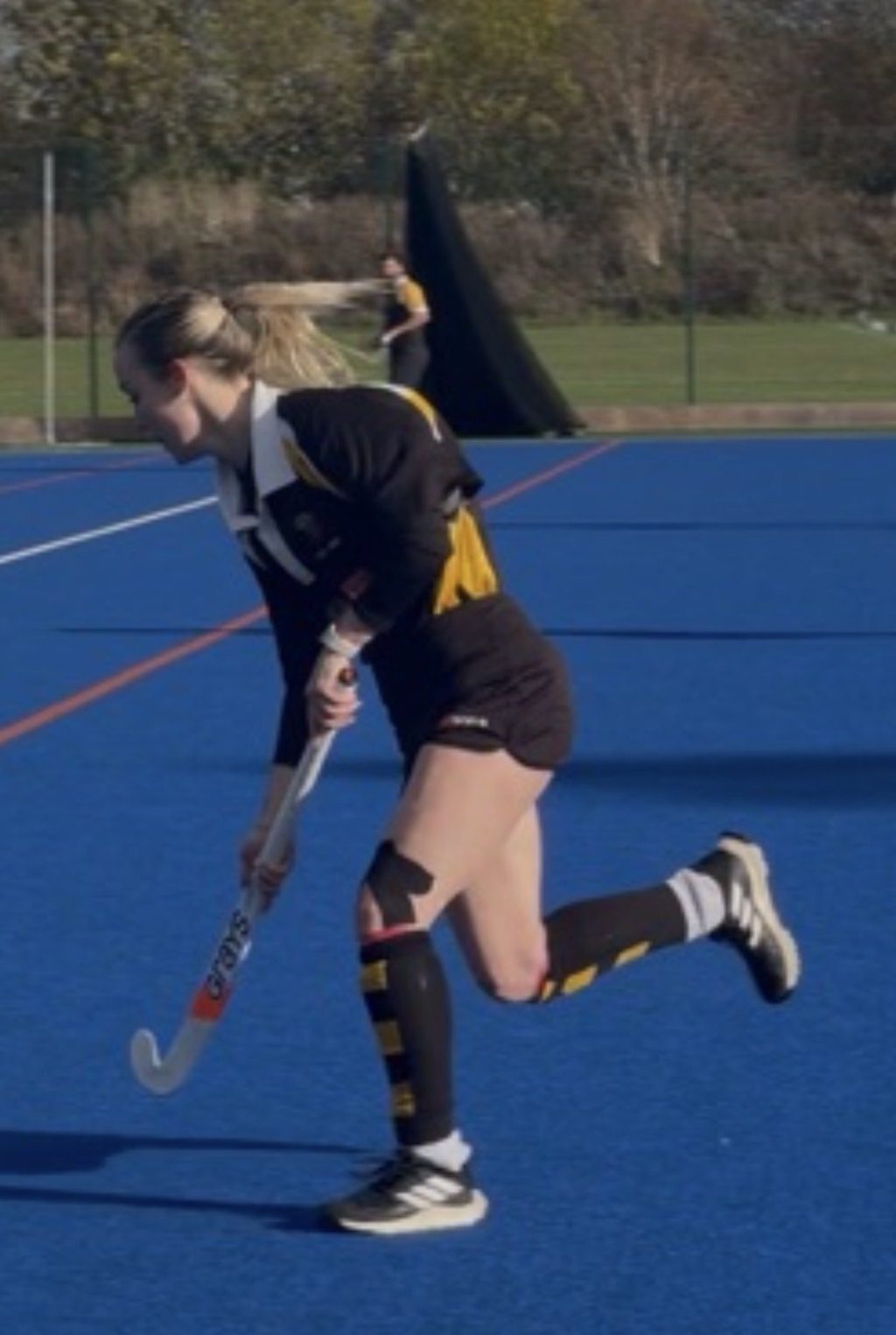
One woman is holding sporting equipment because it strategically covers her breasts. Another is holding that equipment because she has spent thousands of hours (and pounds) learning how to use it. One body is being presented primarily to be looked at. The other is running, jumping, swimming, throwing, tackling, lifting and competing. Both women have bodies, but we’re being invited to value those bodies for completely different reasons. And that distinction matters.
But She Chose It; And That’s Where It Gets Complicated
My immediate reaction to the campaign was to wonder who the men behind it were. Who pitched this? Who decided that putting a naked woman alongside sporting equipment was still a particularly clever concept in 2026? Who directed it? Who approved it?
Except the answer isn’t quite as simple as blaming a room full of men.
Sydney Sweeney wasn’t simply hired as a model, turned up to set, took a cheque and followed instructions. She has an equity stake in Novig and has spoken about her involvement with the partnership and its creative direction. If I’m completely truthful, that’s probably the bit that makes me angriest. Because SHE chose it.
She’s one of the most recognisable young actresses in the world. She has an enormous platform and enormous influence. And she willingly participated in a campaign that, in my opinion, relies heavily on her sexual desirability to generate attention for a sports prediction product. I struggle with that decision.
Especially because this isn’t the first time conversations about Sweeney’s body and advertising have become intertwined. Her American Eagle campaign generated its own enormous debate about beauty, desirability and the way her image was being used to sell a product.
I also don’t think it’s fair (or particularly useful) to turn around and declare that Sydney Sweeney alone is the problem. An advertising campaign of this scale doesn’t appear because one woman wakes up on a Tuesday morning and decides to take her clothes off.
I work in paid advertising. I know how many eyes can end up on a campaign before the public ever sees it. Creative teams, production companies, brand teams, talent managers, directors, executives, media teams, legal teams, compliance teams, platform policies, approvals, revisions and endless conversations can sit behind one piece of advertising. Lots of people will have seen this idea. Lots of people will have approved it, and, almost certainly, some of those people will have been women – which leads me to the part of this conversation I find much more uncomfortable.
What If Men Aren’t the Only Ones Setting Our Beauty Standards Anymore?
I don’t think they are, and I know that’s potentially controversial. I’m not saying men no longer contribute to female beauty standards. They obviously do. I’m not suggesting misogyny has disappeared and women inexplicably decided to start oppressing themselves. And I’m certainly not blaming women for centuries of female objectification. What I am saying is that I think the machinery has changed.
Once upon a time, the stereotypical beauty standard was much easier to trace. Male executives. Male magazine editors. Male photographers. Male directors. Largely male-controlled industries decided which women were beautiful, and those images were packaged up and sold back to us. But now? Open TikTok. Who is making the “What I Eat in a Day” videos? Who is posting the body checks? Who is documenting the glow-ups and weight-loss transformations? Who is explaining how to make your waist smaller, your face less “puffy”, your stomach flatter, your skin smoother, your jaw sharper and your ageing less visible?
Quite often, it’s women. Then other women watch it. We compare ourselves to her. We recreate it. We buy the product. We comment on another woman’s appearance. The algorithm notices the engagement, pushes the content further and another hundred thousand women see it.
The traditional male gaze hasn’t necessarily disappeared. But social media has created something much more complicated around it: a world in which women can participate in producing, enforcing and profiting from the standards other women are expected to meet. That’s something I think we need to be able to talk about without immediately interpreting it as an attack on women… because you don’t have to create a system to participate in enforcing it.
There is also evidence that this constant exposure matters. A meta-analysis of 54 papers examining sexualising media found a significant association between exposure to sexualising media and self-objectification, with the relationship stronger for online media and video games than television. In other words, what we consume doesn’t necessarily remain safely contained inside our screens. It can influence the way we learn to look at ourselves.
SkinnyTok Didn’t Really Disappear
Perhaps nowhere is that more obvious than in the resurgence (or, more accurately, persistence) of thinness culture. TikTok blocked searches for #SkinnyTok in 2025 following criticism of content promoting extreme thinness and unhealthy approaches to weight loss. And hi mum, thanks for being a part of this change in your recent project with Beat and TikTok! Huge kudos to you.
Removing a hashtag doesn’t remove an ideology. The terminology changes. The euphemisms change. The aesthetics change. The trends move somewhere else. The underlying message survives. Beauty standards are almost comically cyclical when you think about them. Be skinny. Actually, no. Be curvy. Have a tiny waist but a big bum. Be “strong, not skinny”. Love your body exactly as it is! But simultaneously optimise every conceivable inch of it. Grow your glutes. Remove your hip dips. Depuff your face. Fix your skin. Prevent wrinkles before you even have wrinkles. And now, increasingly, we’re watching thinness become aspirational again.
There is always another problem we’re being encouraged to discover about ourselves, and, conveniently, there is always somebody waiting to sell us the solution. Research into idealised bodies has also found something worth remembering here: it isn’t only the traditional ultra-thin ideal that can create body dissatisfaction. Exposure to idealised thin, curvy and athletic bodies can all encourage harmful social comparisons, which makes the modern beauty standard particularly difficult to escape. Because now you’re not simply supposed to be thin. You’re supposed to be thin in the correct places, muscular in others, curvy in others, toned but not too muscular, strong but still feminine, and somehow look effortlessly like that while insisting you don’t really care. It’s exhausting.
It’s particularly strange because we’re living through an era supposedly defined by body positivity and female empowerment. We’ve learned all the correct language. We tell women that all bodies are beautiful. We tell girls not to compare themselves. We talk about representation. Then we hand them a phone containing an endless personalised feed of bodies to compare themselves against. Perhaps the beauty standard hasn’t disappeared at all. Perhaps we’ve just become much better at disguising it as wellness, self-improvement and empowerment.
We’ve Forgotten What Women’s Bodies Are Capable Of
This is the part that really gets me. We’ve created a world where women are constantly encouraged to overvalue how our bodies look, and somewhere along the way we’ve forgotten what they’re capable of. Your legs aren’t decorations. Your stomach doesn’t exist to be flat. Your arms don’t need to be “toned” before you’re allowed to wear a vest. Your thighs don’t need to have a gap between them. Your body can run, jump, lift, swim, hit, throw, climb, tackle, dance, recover, play. I’m even more angry on top of this as I’ve just learnt this, after years of wrecking my body, so you can guess why I’m so passionate about this topic.
Your body can take you somewhere, and sport gives women an extraordinary opportunity to experience their bodies through that completely different lens. When you’re chasing a ball, trying to make a tackle, running towards a finish line or attempting to lift something you couldn’t lift six months ago, your body temporarily stops being an object you’re looking at and becomes the thing actually allowing you to live your life. And this is exactly what I’ve been posting about all the time on my TikTok, after years of not being able to sport in the way of enjoying it, and then found her way back to hockey years later.
Instead of asking: How does my body look? You start asking: What can my body do? There is something incredibly freeing about that shift.
There is research behind this distinction too. Studies examining how women respond to sporting imagery have suggested that seeing female athletes actually performing their sport, rather than seeing sexualised representations of female athletes, can encourage a more functional relationship with the body and reduce self-objectifying responses. I find that fascinating because it puts evidence behind something I’ve felt for a long time. Representation isn’t simply about putting more female bodies on a screen. What those bodies are shown doing matters.
Show a girl a woman’s body primarily as something to desire and you’re teaching her one thing. Show her a woman sprinting, lifting, tackling, throwing or pushing her body towards something extraordinary and you’re showing her something completely different. That’s one of the reasons I’m so passionate about encouraging girls into sport.
1.3 Million Girls Who Loved Sport Are Leaving It
This is where the numbers become difficult to ignore. In March 2026, Women in Sport reported that 1.3 million girls who once loved sport drop out during their teenage years, and even the ambition gap is enormous. Only 23% of teenage girls surveyed said they dream of “sporting glory”, ie wanting to do sport at a high level. For boys? 53%. More than twice as many.
Women in Sport says girls report feeling that they don’t belong in sport, feeling judged, particularly by boys, worrying about whether they have the “right” body, concerns around safety, and difficulties associated with female puberty. Its 2026 research also found 70% of teenage girls avoid sport when they’re on their period. Those findings aren’t appearing from nowhere.
Earlier Women in Sport research involving more than 4,000 adolescent girls and boys found that 43% of girls who once considered themselves sporty disengaged from sport after primary school. Then look at the reasons:
68% of girls said fear of feeling judged by other people was a barrier to sport.
73% said they didn’t like other people watching them participate.
78% said they avoided sport while on their period.
61% reported lacking confidence.
56% felt they weren’t good enough.
Perhaps the statistic most relevant to this entire conversation: 52% said feeling they didn’t have the “right” body shape was a barrier. That is more than half. More than half of girls in that group were potentially looking at their bodies and seeing something that prevented them from participating. Not because those bodies couldn’t run. Not because they couldn’t kick a ball. Not because they couldn’t learn to swim, because they felt they had the wrong shape. If that doesn’t demonstrate why the way we represent women’s bodies matters, I don’t know what does.
Think about what we’re asking teenage girls to navigate. Your body is changing. Your boobs are developing. Your hips might be changing. You have periods. You sweat. You have acne. Suddenly you’re hyper-aware of people looking at you. Maybe somebody at school comments on your body (I’ve been there), perhaps PE means changing in front of other girls, perhaps you don’t feel particularly good at the sport you’re being asked to play.
And then, you go home and open TikTok. Immediately you’re shown women with bodies the algorithm has decided are aspirational. You see “What I Eat in a Day,” transformations, gym bodies, weight loss, “glow-ups”. You see women analysing other women’s appearances, people being praised for becoming smaller. And then we’re surprised when that teenage girl doesn’t particularly fancy putting on shorts and running around in front of everybody tomorrow morning?
Girls aren’t simply waking up one morning and deciding they hate sport. For some of them, we’re gradually teaching them that sport is another environment where their body can be seen, compared and judged.
Her Body, Her Choice, So Can I Really Criticise Her?
This is where I find myself sitting painfully on the fence, because I absolutely reject the idea that female empowerment means covering up. A naked woman isn’t inherently an oppressed woman. A woman choosing to sexualise herself isn’t necessarily being exploited. A woman can enjoy male attention. She can enjoy feeling “sexy”. She can profit from her appearance.
And none of those things automatically make her a bad feminist – though that’s a whole can of worms I’m not sure if I want to open!
So, if Sydney Sweeney willingly participated in the campaign, benefited financially from it and felt empowered doing it, who am I to tell her she shouldn’t? I don’t think I can. But I can question the wider message, because individual empowerment and collective consequences aren’t necessarily the same thing. Something can feel empowering to the individual woman participating in it while simultaneously reinforcing a cultural standard that isn’t empowering to everybody else. That’s the uncomfortable middle ground.
I can defend her right to make the choice without agreeing with the choice. Feminism doesn’t require women to applaud absolutely everything another woman does. Agency deserves respect. Choices can still be criticised. This is why I think the phrase “her body, her choice” is completely true while also being slightly inadequate for this conversation. Of course, it is her choice.
The more interesting question is what happens when an individual choice becomes a multimillion-view advertising campaign and enters a culture where millions of other women are already negotiating what their bodies mean…
The Problem Isn’t Nudity. It’s What We’re Being Asked to See.
Imagine an elite female athlete photographed naked. Her muscles visible. Her scars visible. Maybe even marks from years of training visible. Her body being celebrated because of the extraordinary things it has achieved. I wouldn’t automatically find that degrading. It could actually be incredibly powerful, because nudity isn’t necessarily the issue. The question is: What are we being invited to notice?
Are we looking at a woman’s body and thinking: Look at everything this body has achieved. Or: Look at how desirable this woman is.
That’s the difference I keep coming back to with the Novig campaign. The sporting equipment is there, but the woman isn’t really doing sport. She’s ornamental to it, and that’s what makes the imagery feel so dated to me.
You Want to Support Women’s Sport? Start Here.
Talk about periods. If 70% of teenage girls are currently avoiding sport while they’re on their period, that’s a women’s sport problem worth talking about. Talk about the fact that earlier research put that figure at 78% among girls surveyed. Talk about menstrual symptoms and performance. Talk about girls being terrified about leaking through their kit. Talk about sports bras. Talk about puberty. Talk about the 52% of girls who said not having the “right” body shape was a barrier to sport.
Talk about female athletes being criticised for looking “too muscular”. Talk about women being sexualised in comments sections while they’re literally competing at the highest level of their sport. Talk about pregnancy and elite sport. Talk about injuries. Talk about fuelling. Talk about equal access.
Here, there’s another number worth knowing: Women in Sport currently estimates a 24% gender gap in team-sport participation in England, equivalent to around 930,000 fewer girls than boys playing team sport. Talk about grassroots facilities. Talk about women returning to sport after years away. Show elite women, beginners, older women, teenage girls, disabled athletes, women who don’t look like stereotypical athletes; show someone winning an Olympic medal.
Then, show somebody finishing her first 5K. Because women’s sport isn’t waiting around for somebody to make it interesting. It already is.
And Then There’s the Gambling
There’s another uncomfortable layer to this campaign that shouldn’t disappear underneath the body-image conversation. This isn’t an advert for trainers. It’s promoting a sports prediction product. So, we’re not merely discussing a famous woman being sexy in an advert. We’re looking at sexual imagery being used to generate attention around gambling-related behaviour. The commercial construction becomes difficult to ignore. Attractive famous woman, sexual attention, sports audience, prediction/gambling product. That deserves scrutiny completely independently of the feminist debate. Even if you removed every conversation about sexism from this campaign, I’d still want to ask why sexual desire is being used as the doorway into this particular product. And then there’s another question. One that, as somebody who works in advertising, I find almost annoyingly fascinating…
Are We Doing Their Marketing for Them?
Before this controversy, how many people had heard of Novig? Now millions have. Every furious TikTok creates another conversation. Every stitch creates another impression. Every article puts the company’s name in another headline. Yes. Including this one. That’s the horrible paradox of outrage marketing. If nobody challenges something, its message goes uncontested.
But, when millions of people challenge it, the company receives an extraordinary amount of publicity. The outrage becomes distribution. The criticism becomes reach. The people who hate the campaign potentially become some of its most effective media channels. And maybe that’s why I like the response from female athletes so much.
They didn’t simply tell us what they didn’t want to see. They showed us what they did. You want sport? Fine. Here is sport. Here are women sprinting, swimming, cycling, lifting, playing rugby, playing hockey, doing gymnastics, falling over, sweating, winning, losing. Trying again. This is what women in sport look like.
Sydney Sweeney Isn’t the Problem. She’s Part of a Much Bigger Conversation.
I disagree with the campaign, and I struggle with Sweeney’s decision to participate in it. Now knowing that she had a commercial stake in the partnership makes it harder for me personally to dismiss her involvement as simply an actress accepting a job. Though, if we were to remove Sydney Sweeney tomorrow, for example, the system won’t just disappear. Another beautiful woman could replace her, no problably would. Algorithms would still reward provocative imagery. Female athletes would still receive comments about their appearance. Teenage girls would still feel embarrassed about their changing bodies. Women would still compare themselves with women online. Advertisers would still know controversy generates attention.
So, perhaps Sydney isn’t really the story. We are. The culture we’ve collectively created is. That’s why I keep coming back to the contradiction at the beginning of this article: her body; her choice. I still believe that.
I don’t have to like the choice to defend her right to make it. I don’t have to believe an advert is empowering to believe women should have sexual agency. And I certainly don’t have to attack another woman’s body to criticise the way that body has been commercially presented. Why? I’m not particularly interested in whether Sydney Sweeney’s body is attractive. I’m interested in why we’re still so obsessed with whether women’s bodies are attractive at all… especially when we’re talking about sport.
Maybe It’s Time We Remembered What Our Bodies Are For
One of the things I want to achieve with my own platform is encouraging more girls and women to have sport somewhere in their lives. Not necessarily competitively. Not professionally. Not because they need to lose weight. Not because they need to transform their bodies. Just because moving your body can teach you something incredibly powerful: your body belongs to you.
It isn’t an ornament. It isn’t a before picture. It isn’t an after picture. It isn’t content. It isn’t something that needs to become smaller before you’re allowed to enjoy your life. Your body is the thing carrying you through it.
When 1.3 million girls who once loved sport are disengaging during their teenage years, we should be asking much bigger questions about what we’re teaching girls about their bodies, belonging and physical activity. When only 23% of teenage girls dream of sporting glory compared with 53% of boys, we should ask why that ambition disappears. When 68% fear being judged, 73% don’t like being watched and 52% worry they don’t have the right body shape, we should stop pretending body image has nothing to do with girls’ relationship with sport.
I don’t want another generation of girls growing up believing the most interesting thing their body can ever do is look good. I want them to know what it feels like to score, to win that tackle, to sprint as fast as they can, to fall over, to learn, to get back up, to become stronger. Ultimately to quash all these ideal beauty standards of what women in sport should look like – because, and I’ll say it again, this is all still around us, and I genuinely believe it’s women now creating these standards. That, to me, is what female empowerment in sport looks like.
So, yes. I hate the advert. Not because Sydney Sweeney took her clothes off. Not because women shouldn’t be sexual. Not because women’s bodies should be hidden. I hate it because, in a moment when women’s sport has more cultural momentum than it has had for generations, somebody looked at sport, looked at women, and once again decided that the most commercially interesting thing about a woman’s body was how good it looked. We’ve spent enough time teaching girls how their bodies are supposed to look.
Maybe it’s time we showed them everything those bodies can do.
A small disclaimer: these are just my opinions on the topic, and I know we all have different views.

Leave a comment